The 15 quiz questions
Question 1 : What is the capital of Mali?
Possible answers:
- Mopti
- Bamako
- Gao
- Timbuktu
Explanation: Bamako, located on the banks of the Niger River, is Mali's largest city with over 2 million inhabitants. It is the country's economic and administrative center.
Question 2 : In what year did Mali gain independence from France?
Possible answers:
- 1958
- 1960
- 1962
- 1964
Explanation: Mali declared independence on September 22, 1960, first within the Mali Federation with Senegal, then alone after the federation dissolved. Modibo Keïta became the first president.
Question 3 : Which river crosses Mali from southwest to northeast?
Possible answers:
- The Senegal River
- The Niger River
- The Volta River
- The Congo River
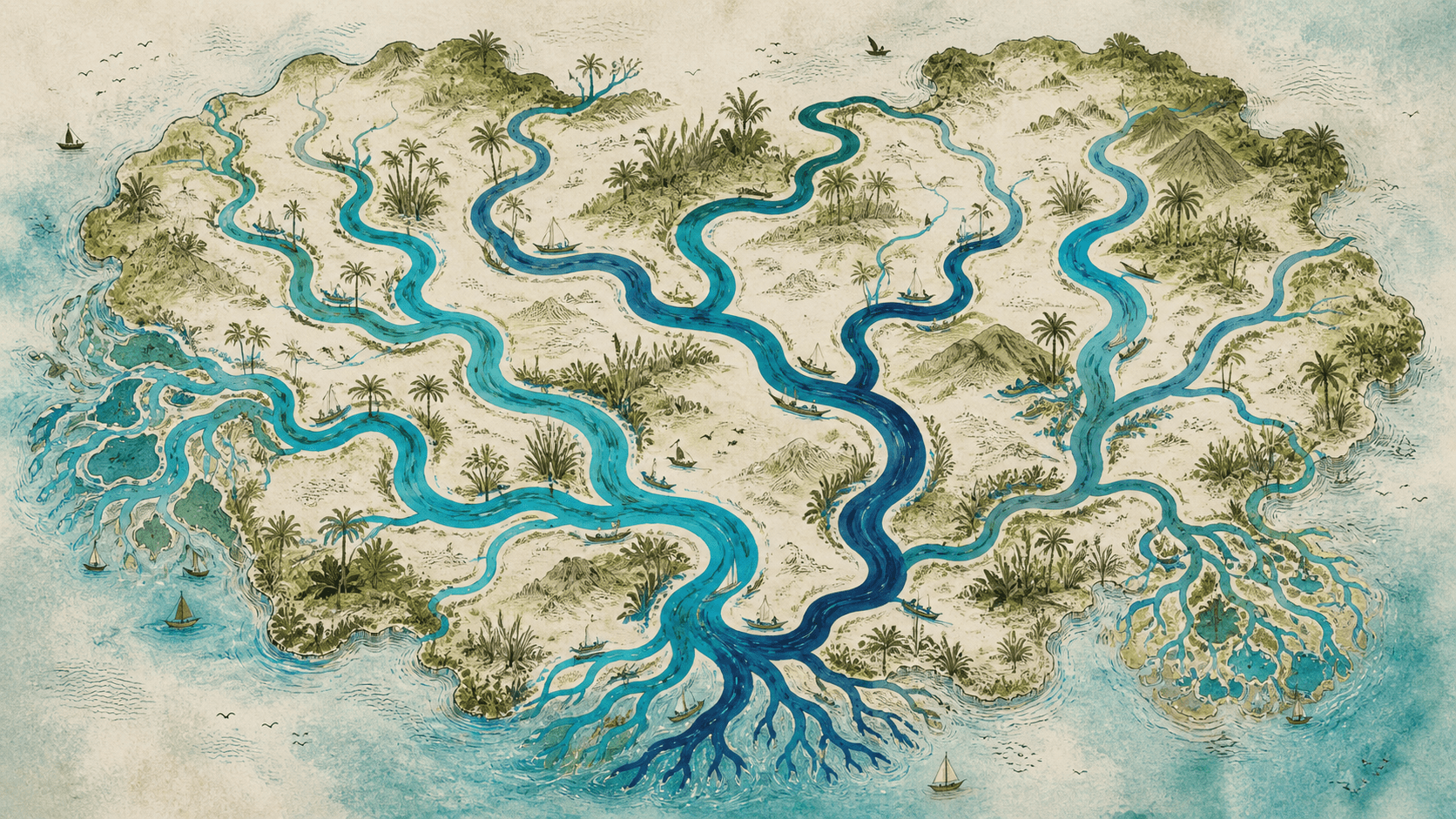
Explanation: The Niger River, Africa's third-longest river, crosses Mali for about 1,700 km. It forms a characteristic arc and is a vital source of water for agriculture and transportation.
Question 4 : The Mali Empire in the Middle Ages was famous for its wealth in which precious metal?
Possible answers:
- Iron
- Silver
- Gold
- Copper
Explanation: The Mali Empire (13th-16th centuries) controlled the gold mines of Bambuk and Bure, making it one of the wealthiest empires of its time. This wealth was supplemented by salt trade.
Question 5 : Which Malian city was nicknamed "the pearl of the desert" and was an important center of Islamic learning?
Possible answers:
- Tombouctou
- Djenné
- Ségou
- Gao
Explanation: Timbuktu was a major trade crossroads and home to the University of Sankore, one of the world's first universities. Its libraries contained hundreds of thousands of ancient manuscripts.
Question 6 : Which 14th-century Malian emperor became famous for his lavish pilgrimage to Mecca?
Possible answers:
- Soundiata Keïta
- Mansa Souleymane
- Askia Mohammed
- Mansa Moussa
Explanation: Mansa Musa reigned from 1312 to 1337 and his hajj in 1324-1325 was memorable for his excessive generosity with gold, even causing inflation that lasted several years in the Middle East.
Question 7 : Which language was the official language of Mali until the 2023 Constitution?
Possible answers:
- Fula
- Arabic
- Bambara
- French
Explanation: French was the official language of Mali for decades, a legacy of colonization. Since the Constitution of July 2023, it has been demoted to "working language": 13 national languages, including Bambara (spoken by ~80% of the population), have become the country's official languages.
Question 8 : In which desert is the northern part of Mali located?
Possible answers:
- The Sahara
- The Namib Desert
- The Nubian Desert
- The Kalahari Desert
Explanation: The Sahara covers about two-thirds of northern Mali. This desert region contrasts with the more fertile south, creating great geographic and climatic diversity in the country.
Question 9 : Which Malian mosque is a UNESCO World Heritage Site?
Possible answers:
- Sidi Yahya Mosque
- Sankore Mosque
- The Great Mosque of Djenné
- Djinguereber Mosque of Timbuktu
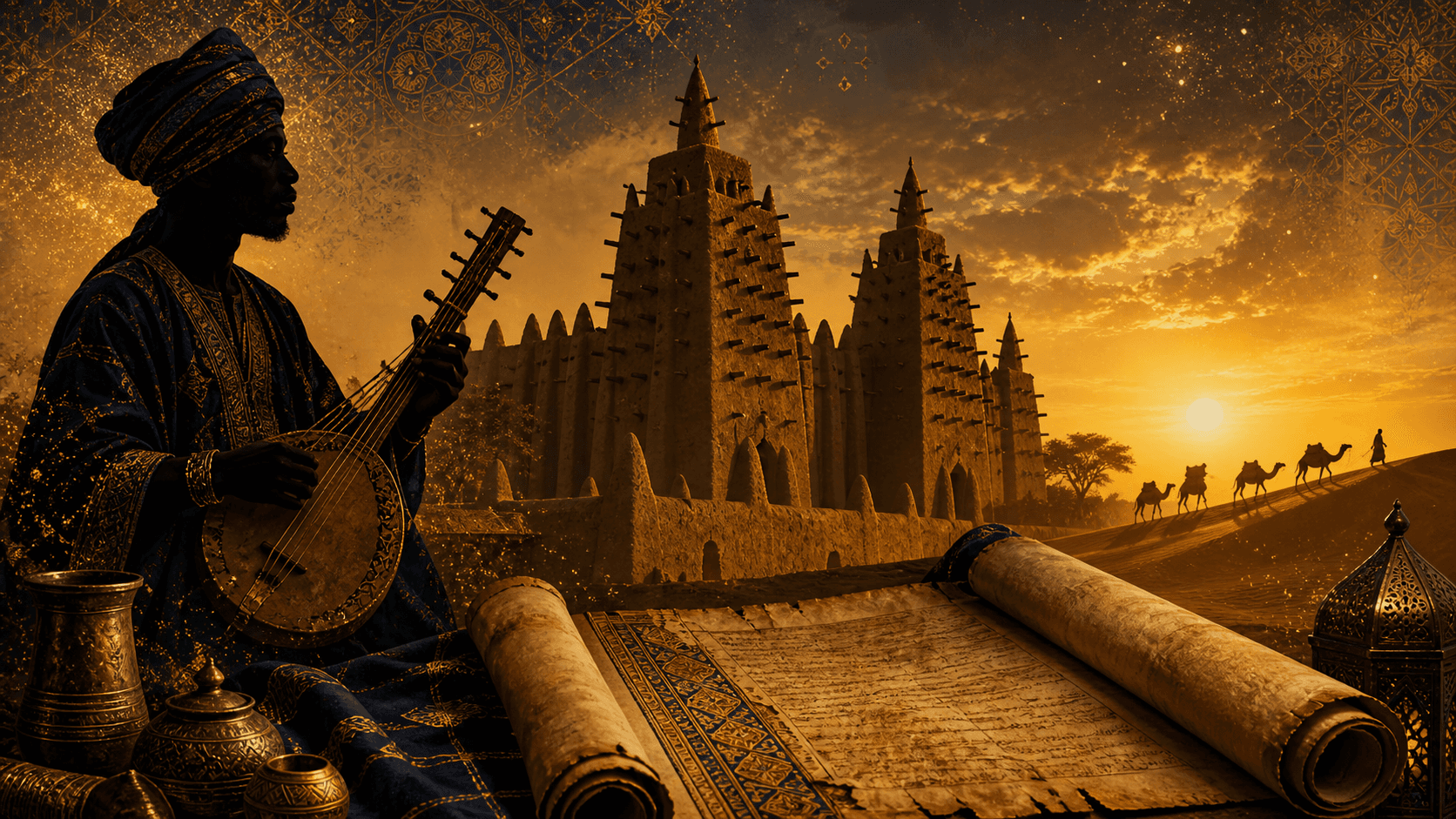
Explanation: The Great Mosque of Djenné, built with banco (mud brick), is the largest mud brick building in the world. It is rebuilt every year during a community festival called "replastering".
Question 10 : Which traditional Malian instrument did Salif Keïta and Ali Farka Touré help popularize?
Possible answers:
- The djembe
- The kora
- The guitar
- The balafon
Explanation: The kora, a 21-string harp-lute, is the iconic instrument of West African griots. These traditional musicians are the keepers of oral history and family genealogies.
Question 11 : What is the approximate area of Mali?
Possible answers:
- 800 000 km²
- 950 000 km²
- 1 240 000 km²
- 1 600 000 km²
Explanation: With 1,240,192 km², Mali is the eighth largest country in Africa and about twice the size of France. It is landlocked, with no access to the sea.
Question 12 : How many countries share a border with Mali?
Possible answers:
- 5 countries
- 6 countries
- 7 countries
- 8 countries
Explanation: Mali shares borders with seven countries: Algeria, Niger, Burkina Faso, Ivory Coast, Guinea, Senegal, and Mauritania, making it a strategic country in West Africa.
Question 13 : Which natural resource represents a significant part of Mali's modern economy?
Possible answers:
- Gold
- Uranium
- Diamonds
- Oil
Explanation: Gold remains Mali's main export resource, representing about 70% of export revenues. The country is Africa's third-largest gold producer after South Africa and Ghana.
Question 14 : Which international music festival takes place annually near Timbuktu in Mali?
Possible answers:
- Festival de Bamako
- Festival des Arts
- Festival du Niger
- Festival au Désert
Explanation: The Festival in the Desert, originally held near Timbuktu, celebrates Tuareg and Saharan music. It helped bring Mali's musical richness and desert peoples to global attention.
Question 15 : Which international organization intervened militarily in Mali in 2013?
Possible answers:
- The United States
- China
- France
- The European Union
Explanation: Operation Serval, launched by France in January 2013, aimed to stop the advance of jihadist armed groups toward southern Mali. It was followed by Operation Barkhane and UN missions.