The 15 quiz questions
Question 1 : What is Abraham called in the Quran?
Possible answers:
- Ibrahim
- Yusuf
- Idris
- Hud
Explanation: Ibrahim is mentioned in 25 suras of the Quran. He is presented as the first hanif, a pure monotheist. The Quran attributes to him the construction of the Kaaba with his son Ishmael (and not Isaac, as in biblical tradition). This divergence is one of the fundamental marks of the Islamic narrative on origins.
Question 2 : Which prophet is thrown into the lions' den by King Darius but comes out unharmed?
Possible answers:
- Jeremiah
- Daniel
- Habakkuk
- Zephaniah
Explanation: Daniel is arrested for praying to his God despite the royal ban. His book, partly written in Aramaic and not Hebrew, also contains the famous apocalyptic visions that will inspire the Book of Revelation. Scholars actually date this text to the 2nd century BCE, far from the Babylonian era in which it is supposed to take place.
Question 3 : How many prophets did God send to humanity according to a famous Islamic hadith?
Possible answers:
- 313
- 25,000
- 124,000
- 313,000
Explanation: According to this hadith attributed to Abu Dharr, the number is 124,000. Only 25 are named in the Quran. Islamic tradition distinguishes nabi (prophets) from rasul (messengers, about 313 according to the same hadith): the latter receive a book or a new law. Muhammad is both nabi and rasul, and according to Muslims, the last.
Question 4 : Which prophet has a famous vision of fiery wheels turning in the sky?
Possible answers:
- Jeremiah
- Isaiah
- Hosea
- Ezekiel
Explanation: Ezekiel opens his book with this hallucinatory vision of "wheels within wheels" beside the Kebar river during the exile in Babylon. The text is so strange that some amateur ufologists see in it an ancient UFO. For scholars, it is rather a symbolic representation of the mobility of the divine throne.
Question 5 : What is Jesus called in the Quran?
Possible answers:
- Isa
- Yusuf
- Yahya
- Dawud
Explanation: Isa ibn Maryam (Jesus son of Mary) is cited in 15 suras. Islam considers him a major prophet but denies his crucifixion: according to sura 4, Allah is said to have raised him to heaven and a look-alike was crucified in his place. Isa must return at the end of times to fight the Antichrist (Dajjal) and establish justice.
Question 6 : In which year is the birth of the Prophet Muhammad traditionally placed?
Possible answers:
- 476
- 570
- 622
- 732
Explanation: The year 570 is traditionally retained, during the "year of the elephant" which would mark a failed attempt to invade Mecca by a king of Yemen with war elephants. His prophetic career begins at age 40, around 610, with the first revelation received in the cave of Hira through Jibril.
Question 7 : What distinguishes a "rasul" from a simple "nabi" in Islam?
Possible answers:
- The rasul is a minor prophet
- The rasul is necessarily Arab
- The rasul receives a book or a new law
- The rasul can only be a descendant of Abraham
Explanation: The rasul receives a written revelation or a new law intended for a community. The nabi transmits a message but without a founding book. All rasul are nabi, but the reverse is not true. Muhammad, Musa, Isa, Dawud and Ibrahim are rasul. The distinction does not appear explicitly in the Quran and was systematized by later theologians.
Question 8 : Which prophet, witness to the destruction of the First Temple, is traditionally associated with the book of Lamentations?
Possible answers:
- Isaiah
- Ezekiel
- Daniel
- Jeremiah
Explanation: Jeremiah is said to have wept over the ruins of Jerusalem in 587 BCE after Nebuchadnezzar's siege. Tradition attributes to him the five poems of Lamentations, which follow an alphabetical order (each of the first 4 chapters has 22 verses, like the 22 letters of the Hebrew alphabet). Modern scholars contest this attribution.
Question 9 : In which city did the Prophet Muhammad die in 632?
Possible answers:
- Medina
- Mecca
- Jerusalem
- Damascus
Explanation: Muhammad dies in the arms of his wife Aisha, in Medina, where he had emigrated ten years earlier. His tomb is today in the Prophet's Mosque, the second holy city of Islam after Mecca. A small curiosity: no precise date is given by the Quran itself, it is tradition (hadith) that established them.
Question 10 : What is Moses called in the Quran?
Possible answers:
- Harun
- Musa
- Sulayman
- Idris
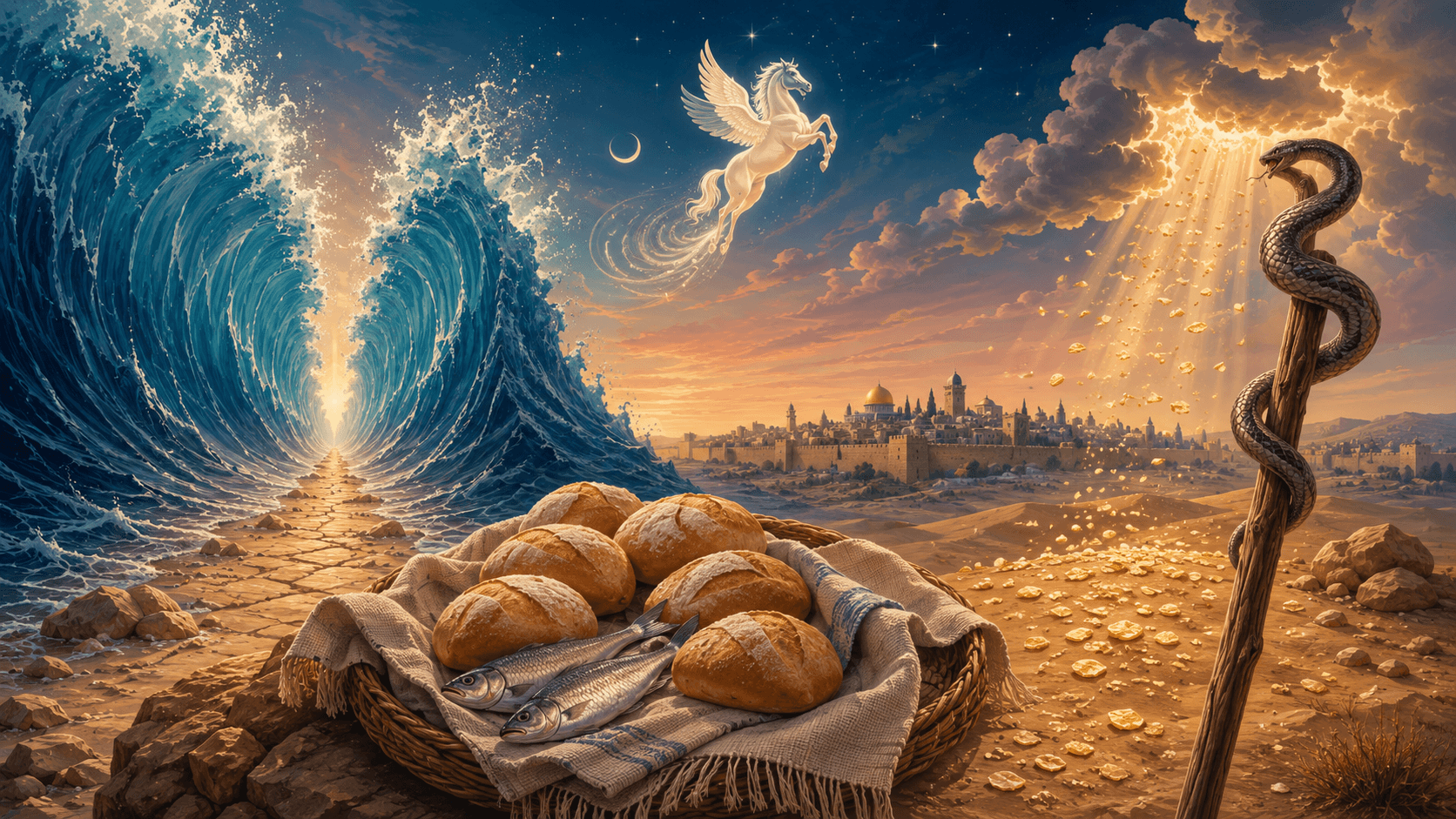
Explanation: Musa is the most cited prophet in the Quran, mentioned in 73 suras. The story of the Exodus is taken up with some variants: Pharaoh is addressed, the plagues of Egypt described, the Red Sea opened. He is also described as meeting Khidr, a mysterious character who does not appear in the Bible and symbolizes hidden wisdom.
Question 11 : Which prophet, mentioned in the Quran under the name Nuh, preaches for 950 years without much success?
Possible answers:
- Lot
- Idris
- Noah
- Hud
Explanation: According to sura 29, verse 14, Nuh (Noah) preaches for 950 years before the Flood without converting many people. Islamic tradition counts him among the five ulu al-azm, "prophets of great determination", alongside Ibrahim, Musa, Isa and Muhammad. Which says a lot about the patience required for the job.
Question 12 : Who succeeds Elijah as prophet in Israel, after receiving his mantle?
Possible answers:
- Elihu
- Amos
- Hosea
- Elisha
Explanation: Elisha asks for a "double portion" of Elijah's spirit and picks up his master's mantle when the latter ascends to heaven. The second Book of Kings attributes 16 miracles to him, exactly double those of Elijah. Jewish tradition sees it as a sign that his request was granted. He notably makes an iron axe rise to the surface of the water and resurrects the child of a Shunammite woman.
Question 13 : Which pre-Islamic Arab prophet, mentioned in the Quran, is sent to the people of Ad?
Possible answers:
- Hud
- Yusuf
- Idris
- Sulayman
Explanation: Hud is one of the three Arab prophets (with Salih and Shu'ayb) recognized by the Quran without a biblical equivalent. He preaches to the people of Ad, in southern Arabia, who refuse his message and are annihilated by a devastating wind. An entire sura bears his name (sura 11), and his presumed tomb is located in Yemen, a place of pilgrimage.
Question 14 : Which apostle, exiled on the island of Patmos, is traditionally considered the author of the Book of Revelation?
Possible answers:
- Paul
- John
- Peter
- Barnabas
Explanation: John receives his visions on the Greek island of Patmos during Domitian's persecutions (end of the 1st century). Modern scholars think that there are actually at least three different "Johns": the apostle, the author of the Gospel, and the author of Revelation. The cave where he is said to have received his visions is still visible today, listed as a world heritage site.
Question 15 : What does the expression "Khatam an-nabiyyin" applied to Muhammad mean in Islam?
Possible answers:
- The first of the prophets
- The prophet of the night
- The seal of the prophets
- The prince of the prophets
Explanation: The expression appears in sura 33, verse 40, and makes Muhammad the last prophet of the monotheistic line. This doctrine of prophetic finality is central in Sunni Islam: no prophet can come after him. It has generated historical conflicts with movements such as Ahmadism or Bahaism, which claim a later prophecy and are considered heretical by orthodox Islam.